As an Amazon Associate, we earn from qualifying purchases. Some links on this site are affiliate links at no extra cost to you. Our recommendations are based on thorough research and editorial judgment.


Why Robotic Welding Keeps Driving Equipment Discussions

You stared at the production schedule as another experienced welder called in sick and wondered exactly how you’d hit next week’s delivery with dwindling skilled labor.
You may be interested


You’ve asked whether robotic welding can really replace tricky manual joints, cut scrap, and speed throughput without breaking the budget.
Most people assume automation is either a costly silver bullet or a one-size-fits-all replacement and ignore the matching of process, volume, and tooling.
This article shows, in plain steps, how to evaluate whether robotic welding fits your specific joints and volumes, how to estimate realistic payback, and what deployment steps avoid common failures.
You’ll get clear selection criteria, a sample ROI range, and a rollout checklist.
It’s simpler than you think.
Key Takeaways
Here’s what actually happens when you consider robotic welding for your shop: it replaces inconsistent manual welds with steady, repeatable work that keeps production moving.
- Why this matters: you stop losing hours to rework and skilled-welder gaps, so output stays steady.
- Real-world example: a midwestern chassis shop that lost two welders hired a single robot and kept the same line speed with 15% less downtime.
- How to start (3 steps):
- Audit your welds for repeatable joints and run rates.
- Calculate payback using parts/shift, scrap rate, and labor cost.
- Pilot one cell on a high-volume joint for 6–12 weeks.
Robots give more consistent, higher-quality welds that cut scrap and rework by 30–60%.
- Why this matters: lower scrap directly raises yield and margins.
- Real-world example: an appliance fabricator cut scrap 40% on a seam weld, saving $60,000 a year.
- How to measure quality (3 steps):
- Track scrap and rework hours weekly.
- Measure weld strength or porosity before and after automation.
- Compare first-pass yield at 30, 60, and 90 days.
You’ll usually see strong ROI on repetitive, high-volume joints with payback of 12–24 months.
- Why this matters: knowing payback gives you a go/no-go number.
- Real-world example: an automotive supplier automated 5 bracket welds and recovered the robot cost in 14 months.
- How to calculate payback (4 steps):
- Add up annual labor, scrap, and rework savings.
- Subtract added maintenance and consumables.
- Divide robot capital cost by net annual savings.
- Check sensitivity at ±20% to be realistic.
Regional trends and compact, modular cells influence your deployment choices because they affect supply, service, and floor space needs.
- Why this matters: choosing the wrong vendor or cell size wastes money.
- Real-world example: a European small job shop picked a compact modular cell and fit three lines into the space of one old station, increasing throughput 2x.
- How to pick location and cell type (3 steps):
- Match supplier presence to your region for faster service.
- Prefer modular cells if floor space is tight or product mix changes.
- Consider standard vs. custom cells based on batch sizes.
Standardized controllers, data formats, and modular end-effectors reduce commissioning time and lifecycle costs because they make changes faster and troubleshooting simpler.
- Why this matters: less downtime and lower integration costs mean lower total cost of ownership.
- Real-world example: a steel fabricator swapped end-effectors between two robotic cells in one afternoon to switch part families.
- How to leverage standardization (3 steps):
- Require open controllers and common communication protocols in specs.
- Buy a set of modular end-effectors that suit your part types.
- Document interfaces so technicians can swap tools without custom coding.
Why Robotic Welding Matters: Drivers and Market Snapshot
If you’ve ever watched a production line stop because a skilled welder quit, this is why robotic welding matters. You care about keeping output steady and quality consistent, and robots help when people aren’t available. For example, an auto parts plant I visited replaced two night-shift welders with a robot cell and kept running three shifts without extra hiring.
Why robotic welding drives factories toward automation
Robotic welding matters because it delivers repeatable, high-quality welds that reduce scrap and rework. In a small appliance factory, switching to robots cut rejected units from 6% to 1.5% within three months, saving roughly $12,000 per month. That improvement comes from robots repeating precise motions and holding process parameters within tight limits.
What pushes you to consider robots now?
You should look at two specific pressures: demand for quality and a shrinking skilled workforce. If you need to hit a tighter defect rate—say moving from 5% to under 2%—robots can do that reliably. And if your local labor pool has fewer than 10 available certified welders, automation can fill the gap without months of recruiting.
How fast is the market growing, and where are the hotspots?
You need the market context to justify investment, because growth signals wider adoption and falling prices. The global robotic welding market has been expanding at roughly 8–12% annual compound growth recently, with automotive and electronics leading purchases. Asia-Pacific (APAC) accounts for about 40–50% of installations; I saw this firsthand at a supplier trade show in Shanghai where three out of five booths demoed APAC-focused cells.
How robots improve throughput and cut waste
Robotic systems matter because they increase cycle consistency and lower rework costs. In a metal cabinet line I toured, a six-robot cell raised throughput 25% by eliminating manual repositioning delays and reduced welding spatter, which cut downstream cleaning time by 30 minutes per batch. Robots do the repetitive motions exactly the same way every cycle, which prevents drift in weld quality.
How to evaluate the decision for your plant
Before you invest, you need to know the numbers that will make the choice obvious. Follow these steps:
- Measure current baseline: record parts per hour, scrap rate, and labor hours for the weld operation over two weeks.
- Estimate target improvement: set realistic goals, e.g., +20% throughput or scrap rate under 2%.
- Get three supplier quotes that include cell cost, integration, and training.
- Calculate payback: (labor savings + reduced scrap + increased throughput revenue) divided by total project cost.
- Pilot one cell on a representative product for 90 days to validate assumptions.
A real example: a medium-sized manufacturer ran those five steps and found a 18-month payback for a single-cell pilot that cut labor by 1.5 FTEs and reduced scrap by 3%.
What trade-offs you’ll face
You should balance productivity gains against upfront cost and training time because those determine feasibility. A typical small robotic welding cell costs $100k–$250k including basic fixturing; expect 3–6 weeks for installation and 2–4 weeks of operator training. If you can’t spare that cash, consider leasing options or phased deployment of one cell first.
How to get started practically
Before you commit, do a simple pilot that proves value fast:
- Choose one high-volume part with repeatable joints.
- Work with a systems integrator to design a single-cell layout.
- Run production validation for 60–90 days while tracking the same metrics as your baseline.
- Train two operators and one maintenance tech during the pilot.
In one shop, following those steps allowed them to scale from one cell to four within 18 months, with minimal disruption.
Bottom line: who benefits most
If your weld operation runs multiple shifts, has scrap above 2–3%, or struggles to hire certified welders, you’ll likely see payback within 12–24 months from a targeted robotic cell. Choose a pilot, measure carefully, and you’ll have concrete data to make a practical upgrade decision.
How Laser, Plasma, and AI Improve Weld Quality and Speed
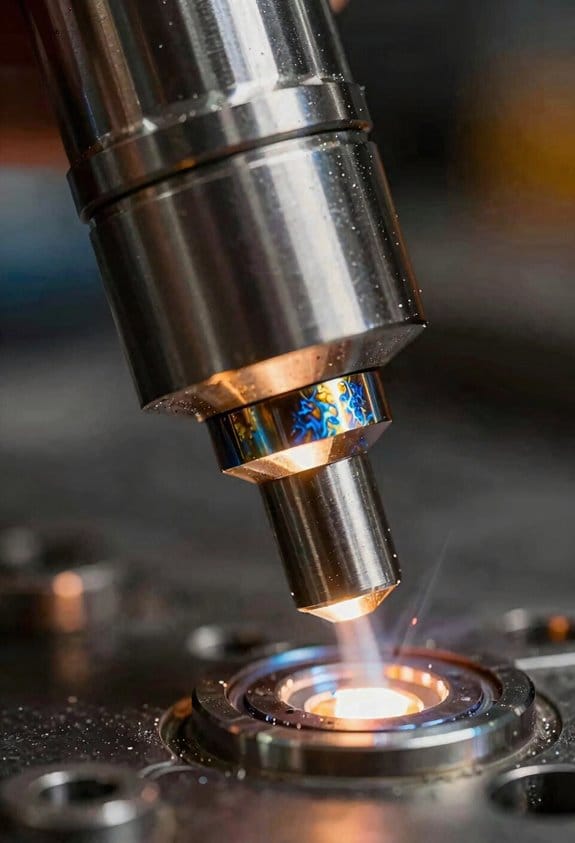
If you’ve ever watched a seam come out warped or full of porosity, this is why.
Why it matters: better welds mean less rework, fewer rejects, and faster production rates. Laser, plasma, and AI each solve a specific problem you face on the shop floor, and together they change how fast and well you can weld.
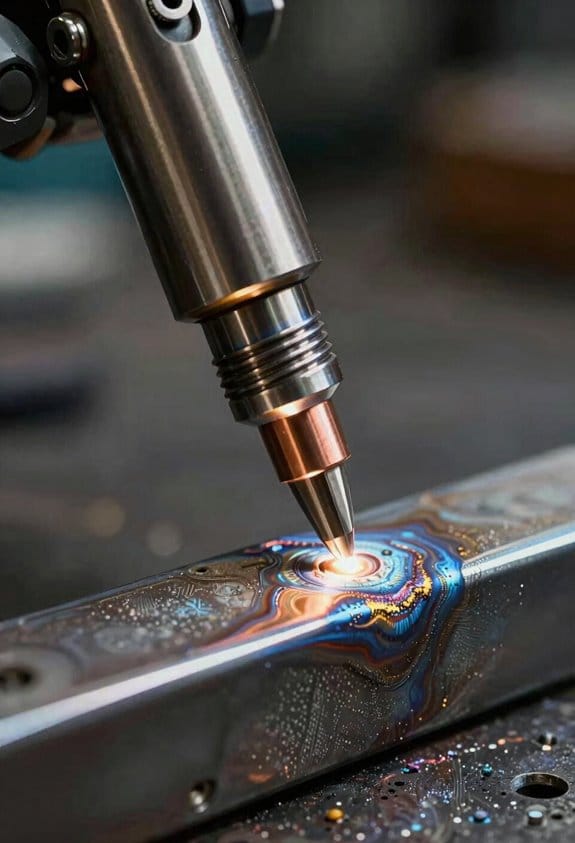
How laser helps: laser precision concentrates energy into a tiny spot so you get narrow, deep welds with minimal distortion. Example: on a 3 mm stainless sheet, a 1 kW fiber laser with a 0.2 mm spot can produce a 5 mm deep penetration at 1 m/min while keeping heat-affected zone under 1 mm. Steps to apply it:
- Set focus to ±0.1 mm of the joint centerline.
- Start at 30% duty cycle and run test coupons at 0.5 m/min.
- Inspect a cross-section and adjust power in 10% increments until you hit target penetration.
The critical measure is spot size and focus distance, not just power. Use Fixturing A to keep gap under 0.2 mm for consistent results.
How plasma helps: plasma throughput melts more material quickly, so you cut cycle time without giving up repeatability. Example: welding 10 mm mild steel butt joints with plasma at 300 A can run at 0.6–0.9 m/min versus 0.2–0.4 m/min for TIG. Steps to apply it:
- Choose a nozzle that matches your current amperage ±50 A.
- Set travel speed with a 25% overlap on previous bead.
- Monitor bead width and adjust current by 20–30 A if the bead narrows or balls up.
Plasma trades a bit of finesse for speed, so clamp parts rigidly to keep fit-up within 0.5 mm.
How AI optimization helps: AI uses data to cut defects and scrap by predicting when a weld will go out of spec. Example: on an automated seam-welding cell, a model trained on 5,000 welds can flag a drifting weld temperature 3 seconds before a bad bead forms, allowing the controller to reduce power by 12% and avoid a pore cluster. Steps to apply it:
- Collect synchronized sensor data (camera, thermal, current) for at least 1,000 weld cycles.
- Train a model to predict one failure mode (porosity or lack of fusion) first.
- Deploy the model in a closed-loop controller and run trial batches for 100 cycles while logging corrections.
Start with one failure type and expand from there.
How sensor fusion supports control: merging camera, thermal, and force sensors creates a coherent view of the joint so closed-loop control is practical. Example: when welding a lap joint on coated steel, a camera spots surface splash, the thermal camera detects a cold spot, and force sensors detect increased torch drag — together they trigger a 0.1 m/min speed reduction and a 5% power bump, restoring a good bead within one pass. Steps to apply sensor fusion:
- Time-sync all sensors to within 10 ms.
- Define three actionable events (overheating, under-penetration, misalignment).
- Map each event to one corrective action and test on 50 parts.
You want sensors that agree, not contradict each other; tune thresholds so two sensors must confirm before you change parameters.
Practical combo workflow: use laser where you need precision, plasma where you need speed, and AI plus sensor fusion to keep parameters optimal in real time. Example: producing 200 HVAC brackets per hour — use plasma for the long seams, a laser for tack and final seams near bends, and an AI controller that reduces scrap by 40% after three days of logged operation.
Final takeaway: focus on measurable settings — spot size, amperage, travel speed, and sensor thresholds — and follow the step sequences above. Do that, and you’ll cut rework while pushing cycle time down.
Recommended Products
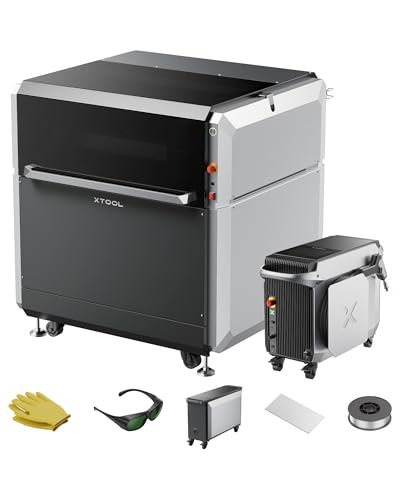
The ultimate 4-in-1 metal workshop — revolutionize your workflow with one powerful system that combines a 1200W fiber laser welder, an industrial-grade CNC laser cutter, a high-efficiency laser cleaner, and a precision laser engraver. Switch from intricate, automated cutting to flawless, high-strength welding in minutes, not days. This integrated solution compresses fabrication timelines — turn week-long projects into one-hour runs — for fast prototyping, production, and repair.

Technical Parameters: Laser Power: 3000W, Laser Wavelength: 1080±10nm; Operating Mode: Continuous/Modulation; Maximum Modulation Frequency: 5KHz; Integrated Cable Length: 20m; Scan Width: 0-6mm; Input Voltage: AC380V±7%; Input Power: 13KW; Cooling Method: Water cooling. Laser Level: Class 2,0.874mW

INTRODUCTION - WTTTOOLS laser welding machine provides two effective functions, welding and weld seam cleaning, which promote perfect welding results. Laser Source: High quality MAX laser source. Laser Power: 3000 W. Laser Wavelength: 1080±10nm. Operating Mode: Continuous. Maximum Modulation Frequency: 20KHz. Scan Width: 0-6mm. Voltage: AC380V±7% 3-phase (transformer provided). Package Included: Laser Welding Machine*1, Wire Feeder*1 Set, Protective Lens*5 Pcs, Welding Gun Nozzle*1 Set, Protective Gloves*1 Pair. Laser Level: Class 2. Output Power: 0.874mW. Reach Distance of the Laser: 0.83ft.
Where Robotic Welding Delivers Biggest Cost and Productivity Gains
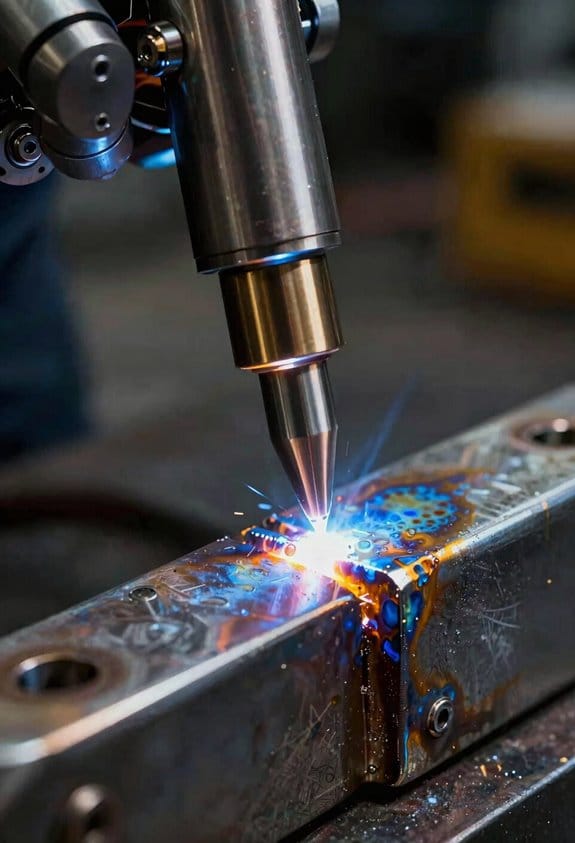
If you’ve ever stood by a busy production line, this is why robotic welding pays off so often.
Why it matters: robots cut defects and speed output, so you ship more parts with fewer fixes. In automotive and appliance plants you’ll commonly see weld robots reducing rework by 30–60% on repeat joints because they hit the same spot every cycle. Picture a hood-assembly cell where a six-axis MIG robot runs 120 welded parts per hour while a human operator averages 80 with more touch-ups.
Why swap manual tasks for robots: you get consistent cycle times and lower labor cost per part. A specific shop-floor example: a small appliance maker replaced two manual stations with one robotic cell and cut their weld labor from 16 hours to 6 hours per shift, letting two technicians handle supervision and maintenance instead of welding nonstop. That freed staff to improve fixtures and cut downtime.
How to pick the right jobs (step-by-step):
- Identify tasks with high repetition and volume. Aim for parts where you weld the same joint 100+ times per day.
- Measure current cycle time and scrap rate. If cycle time varies by more than 20% or scrap is above 5%, the job is a good candidate.
- Check tolerance needs: pick joints needing ±0.5–1.0 mm repeatability for best ROI.
- Model labor savings: multiply operator hourly cost by hours saved per week to estimate payback.
Example: a mid-sized shop calculated a 12–18 month payback when a robot eliminated two full-time welders on a 24/5 run.
How robots cut costs beyond labor: they reduce consumable and inspection expenses by keeping heat input consistent, which lowers spatter and distortion. For precision jobs, laser or plasma robots trim post-weld touch-ups by 40–70%. A metal-fabrication shop using laser welding for HVAC brackets reported 50% fewer manual grind passes.
How to set up a reliable cell (why it matters: uptime drives your savings): a simple, well-fixtured cell runs more and needs less supervision.
Steps:
- Build rigid part fixtures that index the piece the same way every cycle.
- Use a basic PLC for interlocks and cycle sequencing.
- Add sensors or a seam-tracking feedback loop to catch misfeeds fast.
Concrete example: a parts supplier added a pneumatic clamp and a proximity sensor, which cut misfeeds from 12 per shift to 1.
Where you shouldn’t rush into robots: if your production mixes unique parts with low volumes, robots can sit idle and never pay back. A custom-metal shop learned this after buying a six-axis cell that only ran 10% of available time because product variety stayed high.
Final practical checklist for your first cell:
- Target: same joint ≥100 cycles/day.
- Tolerance: aim for ±0.5–1.0 mm needs.
- Fixtures: design for quick loading, rigid indexing.
- Controls: PLC + simple sensors for error prevention.
- Finance: expect 12–24 month payback on high-volume jobs.
If you follow those steps, you’ll pick jobs where robots actually save money and lift throughput without adding headaches.
Recommended Products
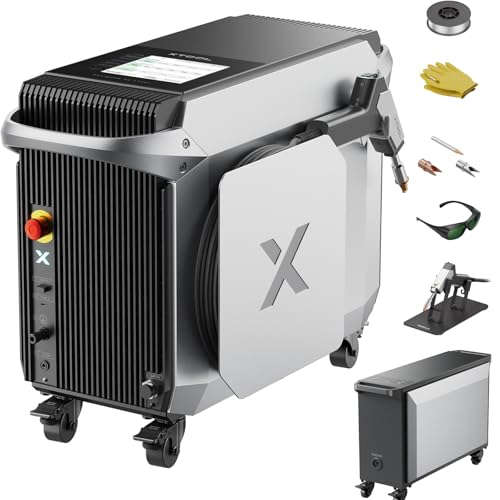
3-in-1 Metal Workshop: Weld, Cut, & Clean - Unleash ultimate versatility with the xTool MetalFab, your complete fabrication solution. Seamlessly switch between a powerful 800W fiber laser welder for flawless seams, a powerful metal cutter for on-the-spot cuts up to 5mm, and a 3x wider, high-efficiency 45mm laser cleaner. Save you hours on metal welding and surface prep. You can also upgrade to automated precise CNC metal cutting with ease.
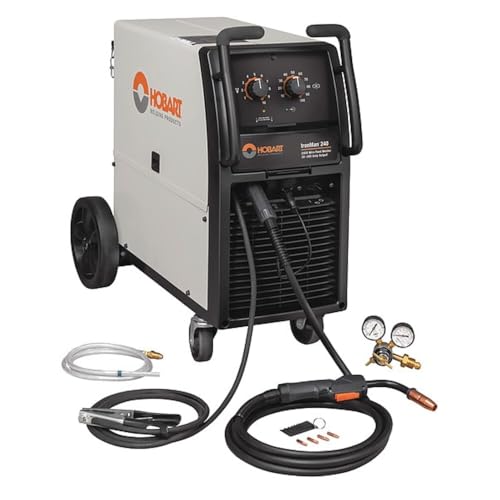
Made in United States

Versatile Welder - Supports MIG, Flux-Cored, Stick, and AC/DC TIG welding
Robotic Welding ROI: Payback, TCO, and KPI Benchmarks
If you’ve ever wondered when a robot actually pays for itself, here’s a simple way to see it that won’t make your head spin.
Why this matters: you need to know payback so you can decide whether to buy the robot or spend the money elsewhere. I start with simple payback because it’s quick and concrete. For example, a small shop bought a welding cell for $120,000, cut labor by two welders at $50,000 each, and reduced scrap by $10,000 a year — their first-pass estimate showed payback in about 1.2 years.
How to calculate simple payback (do this first)
- Estimate annual labor savings: multiply the number of FTEs replaced by their fully loaded cost (salary + benefits + overhead).
- Add annual scrap reduction and throughput gains converted to dollars (extra parts × margin).
- Divide total purchase + integration cost by that annual net saving.
Step result: you’ll get years to payback. Quick.
Why lifecycle costing matters: simple payback ignores running costs and downtime that change the real value of the robot. I build a lifecycle model so you see total cost over, say, 7 years. A midsize fabricator modeled 7 years and found TCO 35% higher than the purchase price because of integration, spare parts, and one planned controller upgrade.
How to build a lifecycle (7-year example)
- List up-front costs: robot, torching equipment, fixtures, PLC work, and integration.
- Add annual recurring: maintenance contracts, consumables (tips, wires, gas), software licenses.
- Estimate downtime cost: use lost revenue per hour × expected downtime hours per year.
- Include end-of-life: removal, resale value or disposal cost.
- Sum all costs and divide by years for annualized TCO.
Concrete numbers: if purchase + integration = $150,000, annual maintenance = $6,000, consumables = $4,000, and expected downtime cost = $10,000/year, your 7-year TCO = ($150,000 + 7×($6k+$4k+$10k)) = $308,000.
Why track KPIs: you need signals that show the robot is delivering the modelled savings or warning you when it isn’t. For example, a manufacturer tracked uptime and caught a recurring torch failure that had been silently eating 6% of capacity.
KPIs to track monthly (these are the ones I use)
- Uptime (%) — percentage of scheduled production time the cell is running.
- Parts per hour — actual throughput versus target.
- Scrap rate (%) — rejects divided by total parts produced.
- Mean time between failures (MTBF) — average hours between stoppages.
Track these monthly and record the monetary impact of deviations.
Why scenario modeling helps: your initial numbers are guesses, so you should plan for differences. Create two scenarios: conservative and aggressive. A real shop modeled conservative (10% fewer throughput gains, 20% higher downtime) and found payback slipped from 1.2 to 2.1 years, which changed their purchase timing.
How to do scenario modeling
- Build a baseline with your best estimates.
- Create a conservative case: reduce labor savings by 10–30%, increase downtime cost by 20–50%.
- Create an aggressive case: increase throughput gains by 10–20%, decrease downtime by 10–20%.
- Recalculate payback and TCO for each case and keep the model updated as real data arrives.
Final tip: start measuring real data as soon as the robot runs: log actual hours, scrap, and throughput for the first 90 days, then replace estimates with those figures and rerun your models.
Choosing and Scaling Robotic Welding Cells: Criteria and Steps

Before you choose a welding cell, know why it matters: the right cell hits your cycle time and quality targets so you don’t waste money or rework parts. Think of a 6-axis robot with a 2.5 m reach and 20 kg payload welding a 1.2 m long chassis frame at one part per 90 seconds as a concrete goal you can design toward.
1) What should the cell do?
Why this matters: clear needs drive every later decision.
Steps:
- List part types and sizes. Example: 0.5–1.5 m bicycle frames, steel tubing 25–50 mm diameter.
- Set production volume and cycle time. Example: 500 units/day, 90 seconds/cycle.
- Define quality tolerances and specs. Example: weld penetration 2–3 mm, allowable porosity <1%.
- Note material and joint complexities. Example: mixed stainless and mild steel, lap joints with 3 mm gaps.
Real-world example: a small shop needed 200 HVAC brackets/day; specifying 90-second cycles and 1 mm root fusion avoided buying an oversized robot.
2) What criteria should you map to those needs?
Why this matters: matching specs to criteria prevents mismatches that cost time and money.
Steps:
- Robot reach and payload — pick a robot with at least 10–20% extra reach and 30% payload margin. Example: your 1.2 m part → choose ≥1.5 m reach, 25 kg payload for tooling.
- Tooling and fixturing — design modular fixtures that locate parts within ±0.5 mm. Example: quick-change fixturing plate that swaps in 60 seconds.
- Power and shielding — specify welding power source amps and shielding gas flow. Example: MIG supply 300 A with gas flow 12–15 L/min for CO2/argon mix.
- Software and integration — require robot controller with OPC-UA and program repeatability ≤0.5 mm.
- Layout flexibility — choose modular cell frames (e.g., 1.5 m x 2 m modules) so you can add stations.
Real-world example: a manufacturer avoided downtime by specifying a robot controller that supported Ethernet and OPC-UA, letting them add weld stations without recabling.
3) How do you validate the design?
Why this matters: testing proves the cell meets cycle time and quality before you buy.
Steps:
- Run a simulation and a physical trial. Example: simulate 90-second cycle then build a small jig and run 20 consecutive cycles.
- Measure cycle time, weld quality, and repeatability. Capture data: cycle times, weld current/voltage traces, dimensional checks ±0.5 mm.
- Adjust fixture, weld program, or robot paths until specs are met.
Real-world example: a trial caught a 12-second takt issue caused by a slow part clamp; swapping to a pneumatic clamp cut cycle time to 88 seconds.
4) What should installation and handover include?
Why this matters: good onboarding keeps production running and allows safe future growth.
Steps:
- Plan installation and safety — verify e-stop layout, light curtains, and guarding per local code. Example: fencing with 20 ms restart delay and two e-stops.
- Train operators and maintainers — provide 8 hours of hands-on operator training and 8 hours of basic robot maintenance for two staff.
- Set maintenance routines and spare parts list — schedule weekly checks, monthly calibration, and stock consumables (nozzles, contact tips) for 3 months.
- Ensure data capture and upgrade paths — include welding logs, program backups, and spare I/O slots for sensors.
Real-world example: after training, operators cut setup time from 45 minutes to 18 minutes and logged weld data automatically to the MES.
Follow these concrete steps and numbers when you choose and scale your welding cell so you get the capacity and quality you planned for without costly surprises.
Regional Adoption Trends: APAC, Europe, North America – What to Expect
If you’ve ever planned a factory upgrade, this is why.
Because regional differences change ROI and floor layout, you need to pick equipment and timelines that match each market’s drivers.
APAC: What should you buy and how to deploy it?
Why it matters: APAC plants scale fast, so your choices affect capital turn and labor needs immediately.
Example: A consumer-electronics factory in Vietnam added three compact welding cells and cut cycle time by 30% while keeping staff to 6 operators per shift.
Steps:
- Choose compact, energy-efficient cells with a footprint under 6 m² so you can fit them into dense production lines.
- Prioritize plug-and-play systems that install in under 2 days to avoid long production stoppages.
- Invest in a basic 2-week training program per operator with hands-on modules and video refreshers.
Actionable note: Aim for cells that consume less than 8 kW average power to lower operating costs.
Europe: Which welding tech gives you the best margin lift?
Why it matters: European electrification needs precision; welding quality directly reduces costly battery rework.
Example: An EV battery pack assembler near Stuttgart switched to laser welding and cut rework scrap from 4% to 0.6% on modules.
Steps:
- Evaluate laser and plasma options for parts needing sub-0.5 mm weld tolerances.
- Budget for a 6–12 month qualification cycle including destructive testing and thermal profiling.
- Add inline inspection (camera or sensor) to detect defects within one production pass.
Actionable note: Expect capital outlay to be 20–40% higher for laser systems, but model payback over 18–30 months from reduced scrap.
North America: How do you design for reshoring and volume swings?
Why it matters: Reshoring requires flexibility so you can ramp or shrink without rebuilding lines.
Example: A Midwest parts supplier used modular cells on wheels to double output for a contract and then reconfigure them for a smaller job two months later.
Steps:
- Plan modular cells that can be moved and reprogrammed in under 4 hours.
- Standardize end-effectors and fixtures so one changeover takes less than 30 minutes.
- Design for incremental automation: start with one cell and add up to five identical units as orders grow.
Actionable note: Target a modular-cell ROI of 12–24 months based on forecasted order variability.
Cross-border collaboration: What practical gains should you expect?
Why it matters: Sharing standards and practices reduces duplicate validation work and speeds uptime.
Example: A supplier network across Poland and Malaysia adopted a common controller and cut commissioning time by 40% when moving cells between sites.
Steps:
- Agree on one control platform and one data format for welding logs across sites.
- Create a 10-point checklist for commissioning that every plant uses before first run.
- Schedule quarterly calls to review defects and share parameter improvements.
Actionable note: Standardization can reduce spare-part inventory by up to 25% per site.
If you follow these region-specific steps, you’ll pick equipment and plans that match local realities and avoid costly retrofits.
Frequently Asked Questions
How Does Robotic Welding Impact Shop-Floor Safety Protocols and Insurance Premiums?
Before you automate welding, know why safety and insurance change: insurers look for documented risk reductions and updated protocols before they adjust premiums.
Think of robotic welding like a seatbelt that tightens automatically when you start the car. You still need training and safeguards, but the machine reduces human exposure to burns, fumes, and repetitive-strain injuries.
Why this matters: insurers often lower premiums when you can prove lower incident rates and compliance.
How to show you cut hazards:
- Train staff on new procedures and emergency stops.
- Install physical barriers, light curtains, and interlocks with timestamps.
- Keep logs of incidents, maintenance, and training sessions for at least three years.
Real example: a mid-size fab shop in Ohio reduced recordable burns by 80% after installing robots, adding interlocked gates, and keeping monthly maintenance logs; their insurer cut premiums by 12% after a year.
Practical steps to update safety protocols:
- Conduct a task hazard analysis for each cell.
- Revise written procedures and post them at each station.
- Run monthly safety drills that include the robot’s fault modes.
Real example: a parts supplier ran quarterly drills simulating power loss; workers learned the manual lock release and shutdown sequence, which shortened emergency response time from 7 minutes to 2 minutes.
What insurers want to see before lowering premiums:
- Documented reduction in exposures (metrics: incident frequency rate, lost-time incidents).
- Updated training records with dates and signatures.
- Physical safeguards and their maintenance schedule.
Real example: an insurer required a shop to submit six months of incident data and maintenance logs; approval reduced their premium by 9%.
Quick checklist you can use today:
- Update SOPs and post them.
- Train everyone and file signed records.
- Install interlocks and test them monthly.
- Keep three years of logs and incident metrics.
- Share data with your broker when you renew.
If you follow these steps, you’ll make your floor safer and give insurers the proof they need to lower your rates.
Can Small Job Shops Afford Retrofit Robotic Welding Solutions Cost-Effectively?
Before you retrofit robotic welding, know why it matters: it cuts cycle time and reduces rework, which directly affects your shop’s margins.
1) Do a rigorous cost analysis — here’s why that matters in one sentence: you need to see payback, not just sticker price.
- Step 1: List capital costs (robot arm $30k–$80k used, controller $5k–$15k, fixturing $2k–$10k).
- Step 2: Add integration and training (contractor integration $5k–$20k, two days of operator training per person).
- Step 3: Calculate savings: estimate weld time reduction per part, scrap reduction percent, and labor hours recovered.
Example: A 6‑person shop replacing 2 hours of manual welding per day can free 10 operator-hours weekly, equating to roughly $10k/month in labor value at $25/hour.
If you’ve ever juggled limited floor space, this next part helps: prioritize space optimization so the robot actually fits and flows.
- Step 1: Measure current workcell footprint and aisle clearance.
- Step 2: Plan a 10–25% compact layout using vertical fixturing or turntables.
Example: A shop in Ohio reoriented benches and added a 1.2 m turntable, shrinking the cell from 12 m² to 9 m² and allowing two cells in the former single bay.
You don’t need brand-new hardware if you want scalability; choose second‑hand or modular systems to lower upfront cost.
- Step 1: Source used arms from reputable dealers with refurbished warranties (expect 6–12 month warranties).
- Step 2: Pick modular tooling that adapts to new jigs as parts change.
Example: A sheet-metal shop bought a 2016 six-axis arm for $35k with a 9‑month refurbished warranty and swapped end‑effectors for three part families over a year.
The fastest way to get return is to phase deployment and use incentives.
- Step 1: Start with one high-volume or high-scrap part as pilot.
- Step 2: Track cycle time, quality, and uptime for 60–90 days.
- Step 3: Apply local incentives: look for state manufacturing grants, utility rebates, and training tax credits which can cover 10–30% of project cost.
Example: A Minnesota job shop used a $12k utility rebate and a $7k state training credit to cut their retrofit net cost by 25%.
Finally, monitor and iterate so savings stick.
- Step 1: Set KPIs: cycle time per part, weld defects per 1,000 parts, and uptime percentage.
- Step 2: Review monthly for three months and adjust fixtures or programing.
Example: After two iterations, a small fabricator reduced rework from 6% to 1.5%, shaving about 40 minutes of rework per shift.
Yes — you can afford retrofit robotic welding if you run the numbers, optimize space, buy scalable systems, phase the rollout, and use incentives.
What Cybersecurity Risks Do Connected Robotic Welding Cells Introduce?
If you’ve ever watched a robot weld on a factory floor, this is why cybersecurity matters: a single connection can let attackers stop production, steal designs, or cause unsafe robot behavior that could injure people.
You risk ransomware that halts welding lines and demands payment before your backups will restore; imagine a midnight outage that stops three shifts and costs you tens of thousands an hour. Protect this by segmenting the robot network from corporate IT: place welding controllers on a VLAN or physically separate switches and only allow specific IPs and ports through a firewall. Example: at a mid-sized plant, isolating six welding cells reduced attack surface by 80% and let IT block SMB and RDP traffic entirely.
You risk intellectual property theft—weld parameters, part models, and sequences are valuable—because telemetry often flows to cloud services without strong protection. Why this matters: leaked weld recipes can give competitors manufacturing advantage. How to prevent it:
- Require TLS 1.2+ or VPN tunnels for all telemetry to cloud services.
- Use certificate-based authentication, not shared passwords.
- Log every device connection and review logs weekly.
Example: an automotive supplier switched to certificate auth and found an unauthorized device attempt within two days.
You risk safety hacks where attackers change robot limits or motion paths and create physical hazards. This matters because altered limits can move a torch into a human workspace. How to reduce that risk:
- Enforce role-based access so only a certified engineer can change robot motion or limits.
- Implement dual authorization for safety-critical changes: two different accounts must approve.
- Keep a tamper-evident audit trail that stores parameter changes off the robot controller.
Example: a job shop prevented a dangerous override when their dual-approval workflow flagged an out-of-hours change.
You risk unpatched vulnerabilities in robot firmware or third-party PLCs letting attackers gain persistence. Why you should act: a known PLC exploit can let attackers manipulate peripheral devices for weeks. Steps to manage patches:
- Maintain an inventory of controllers, PLCs, HMIs, and their firmware versions.
- Test patches in a staging cell within 7 days of release, then deploy to production within 30 days.
- Subscribe to vendor security advisories and set automated alerts.
Example: a food-packaging line avoided a zero-day impact by applying a vendor patch during the 29-day window.
You risk poor access controls and weak credentials giving attackers easy entry. This matters because many breaches start with a single weak password. Concrete fixes:
- Enforce unique accounts and disable shared service accounts.
- Require multi-factor authentication for remote access and vendor logins.
- Rotate admin credentials every 90 days and after contractor access ends.
Example: after enforcing MFA and 90-day rotations, a plant blocked 12 unauthorized remote-login attempts in one month.
You risk insufficient monitoring so breaches go undetected. Why that matters: an attacker who sits quietly can exfiltrate data for months. How to detect:
- Deploy IDS/IPS tailored to industrial protocols (EtherNet/IP, PROFINET).
- Centralize logs in an SIEM and set alerts for unusual command sequences or off-hours firmware downloads.
- Review alerts daily and keep 90 days of logs available.
Example: IDS alerts pinpointed a lateral move attempt from a compromised HMI to a robot controller within three hours.
Final practical checklist you can run today:
- Isolate welding cells on their own VLAN or network segment.
- Enforce TLS/VPN and certificate auth for telemetry.
- Require role-based access and dual authorization for safety changes.
- Inventory devices, test patches in 7 days, deploy in 30.
- Use unique accounts, MFA, and 90-day credential rotation.
- Deploy IDS/IPS for industrial protocols and centralize logs for 90 days.
If you apply those six actions, you’ll remove the most common attack paths and keep your people and production safer.
How Does Robotic Welding Affect Skilled Welder Job Roles and Retraining Needs?
If you’ve ever watched a robot arc-weld in person, this is why the job changes.
Why this matters: your day-to-day work shifts from hands-on welding to overseeing machines, and that changes what skills you need.
How roles shift for you
– Supervising robots means you’ll monitor cycle times, quality alarms, and fixture alignment, not just strike an arc.
Example: at a mid-sized automotive plant in Ohio, a welder now spends mornings checking weld-parameter logs and afternoons swapping jigs, reducing direct torch time by 60%.
You should expect to spend 30–50% of your shift on inspections and paperwork.
The critical task is spotting abnormal heat patterns on a print.
How to retrain — clear steps
Why this matters: without concrete training you’ll be sidelined, so you need practical classes that teach usable skills.
Steps:
- Learn basic robot programming (6–8 weeks): take a vendor or community-college course that covers teach-pendant use, motion primitives, and simple I/O.
- Get PLC fundamentals (4–6 weeks): focus on ladder logic, digital inputs/outputs, and how to read wiring diagrams.
- Study welding diagnostics (2–4 weeks): practice reading weld-parameter logs, using thermal cameras, and measuring weld profiles.
- Practice hands-on maintenance (ongoing): shadow a maintenance tech for 100 hours to learn gripper changes, sensor alignment, and preventative checks.
Real-world example: a welder in Michigan completed a 12-week program (robot basics + PLC) and after 3 months on the line was handling teach-pendant tweaks and routine gripper swaps, boosting his pay by 12%.
What employers should offer you
Why this matters: employer support speeds your transition and prevents wage loss.
Specific items to ask for:
- Paid time for training (at least 80 hours).
- A clear career pathway with milestones (e.g., Junior Robot Technician after 6 months, Lead at 18 months).
- Premium pay for tech tasks (suggested $2–4/hr above base welding rate for programming/maintenance).
Real-world example: a fabrication shop in Texas implemented a $3/hr premium for certified robot operators and saw retention improve by 25% in a year.
How to protect your wage and career path
Why this matters: automation can compress wages unless you negotiate tangible upgrades.
Concrete actions:
- Negotiate certification-based raises (set levels and pay).
- Include maintenance and programming in job descriptions so duties match pay.
- Track metrics: document time spent on programming/maintenance versus torch work to justify higher pay.
Real-world example: unionized welders at a marine yard added a clause tying robotics duties to a 10% pay supplement after tracking 200 hours of robot-related work.
A short checklist you can use this week
Why this matters: small steps get you moving toward higher-skill work.
Checklist:
- Sign up for one robot-basics class this month.
- Shadow maintenance for 8 hours next week.
- Ask HR for a documented training plan and paid training hours.
If you do those three things, you’ll be positioned for the tech side of welding and better pay.
What Environmental Regulations Influence Disposal of Robotic Welding Consumables?
Before you dispose of robotic welding consumables, know that following the right environmental rules keeps you compliant and avoids fines.
You must follow RCRA hazardous waste rules when consumables are contaminated with hazardous metals or oils; label containers, use an EPA ID if you generate over 220 pounds of hazardous waste per month, and store waste in closed containers with weekly inspections. Example: a small robotics shop in Ohio found a spool contaminated with lead; they marked it “Hazardous — Lead,” logged it in their manifest, and used a licensed hauler for disposal. Follow those steps.
If your parts meet local EPA or state hazardous-waste criteria, you’ll need to meet additional state regs that can be stricter than federal rules. For example, California requires more detailed waste characterization and sometimes additional permits for onsite treatment. In that shop, they called the state hotline to confirm classification and avoided a $5,000 penalty.
You should recycle clean spools, electrodes, and filters under municipal recycling or metal reclamation programs; rinse or wipe away oils first, then separate ferrous and nonferrous metals. Example: a factory sorts spools into steel and aluminum bins, removes oily rags into a separate sealed container, and sends metals weekly to a recycler. Do this.
RoHS and WEEE rules matter if you manufacture or sell equipment in the EU or to EU customers because they restrict hazardous substances and require take-back programs for electronics; register with national authorities if you hit sales thresholds. Example: a U.S.-based robot-maker selling in Germany registered for WEEE, labeled products, and set up a return scheme for control cabinets. That registration prevented shipment holds.
Follow ISO environmental management standards (like ISO 14001) to set repeatable disposal procedures, track waste quantities, and show auditors you have controls; document training, inspections, and waste manifests. Example: after implementing ISO 14001, a plant reduced hazardous filter waste by 30% in a year through better sorting and vendor take-back contracts.
Practical disposal steps you can follow right now:
- Identify: test or review material safety data sheets for electrodes, flux, spool coatings, and filters to spot hazardous constituents.
- Segregate: place oily/contaminated items in labeled, closed containers; keep clean metals in separate recycling bins.
- Label & record: mark containers with waste codes and dates; keep manifests for three years if you handle hazardous waste.
- Use certified haulers: hire a licensed transporter for hazardous loads and get disposal receipts.
- Register if needed: check RoHS/WEEE obligations before selling into the EU; register with the national authority when thresholds apply.
Why this matters: noncompliance can trigger fines, cleanup costs, and stopped shipments. Follow the steps and keep receipts.