As an Amazon Associate, we earn from qualifying purchases. Some links on this site are affiliate links at no extra cost to you. Our recommendations are based on thorough research and editorial judgment.


Why Welding Accessories Are Becoming a Bigger Search Topic

You’re about to weld a thin EV battery tab and the tip smears, or you’re facing an offshore repair and can’t confirm the filler grade — which exact part fixes this now? You’ve stared at lists of vague product names and long lead times and still don’t know which accessory prevents scrap or downtime. Most people assume any “welding accessory” will do or trust vague specs without verified materials and cycle ratings.
This piece shows you how to identify and source the exact accessories you need — low-heat tabbing tools for thin tabs, ER316L-grade fillers for corrosive environments, robot-ready contact tips and cooling for continuous-duty cells — and how to verify specs, photos, test reports, and realistic lead-time backups. You’ll be able to pick the right part and avoid costly delays. It’s simpler than it looks.
Key Takeaways
If you’ve ever watched a plant scramble for parts after a weekend shut, this is why.
You may be interested

Rising EV, renewable, and infrastructure projects need different welding gear, and that changes what you search for. Why this matters: using the wrong filler or nozzle can cost you hours of rework and hundreds of dollars in scrap. Example: a shop switching to aluminum battery trays needed low-heat torches and aluminum-specific filler rods; they tested three fillers and cut weld time by 30% with the right match.
1) What specialty accessories are people actually searching for?
Why it matters: getting the right item first saves time and prevents rework.
- Low-heat or pulse-capable torches for thin EV panels.
- Corrosion-resistant filler metals (e.g., 5XX series stainless overlays) for offshore renewables.
- Ceramic nozzles and heat shields for high-temperature coatings.
Real-world example: a contractor replacing bridge bolts ordered ceramic nozzles after a single failed run; the nozzles lasted 4x longer.
2) How does automation change your consumable needs?
Why it matters: automation raises consumption and changes ordering cadence.
Steps to act:
- Track consumption per shift (pieces/hour or meters/hour).
- Multiply by shifts per week to get weekly use.
- Order 1.5–2x weekly use as a buffer for peak weeks.
Example: a robotic cell that uses 50 contact tips/hour across two shifts will need ~800 tips/month; ordering 1,200 avoids mid-month stockouts.
3) Why do supply issues push you to search more online?
Why it matters: shortages force quick alternatives and affect lead time planning.
Steps to act:
- Identify 2 alternate suppliers for each critical item.
- Note each supplier’s lead time in days.
- Keep a running list of compatible part numbers and cross-references.
Example: during a filler shortage, a fabricator used cross-reference charts to switch suppliers within 48 hours.
4) How do sector-specific compatibility checks change your buying?
Why it matters: compatibility errors lead to failed inspections or unsafe parts.
Steps to act:
- Check model charts and spec sheets for your machine and accessory.
- Request a test report or material cert for critical fillers.
- Run a 1–2 hour test weld on scrap before full production.
Example: a solar installer matched a machine’s wire-feed rate chart to a new spool and avoided porosity problems.
5) What procurement practices make your inventory and downtime rules work?
Why it matters: good rules stop unplanned downtime and costly rush shipments.
Steps to act:
- Set reorder points (e.g., reorder when inventory = 2 weeks of use).
- Keep at least one spare roll or part per critical machine.
- Source from multiple suppliers and rotate stock monthly.
Example: a shop set reorder points at 14 days and kept a spare spool for each robot, cutting emergency orders by 70%.
Final takeaway: search trends reflect real, specific needs — you should record exact part numbers, measure consumption in concrete units, and set simple reorder rules so you can swap suppliers fast and keep production running.
Why Searches for Welding Accessories Are Spiking
If you’ve ever watched your tool crib run low mid-job, this is why.
Welding accessory searches are spiking because demand is rising across industries; you’ll see more work for electric vehicles, renewable energy, and big infrastructure projects, and that means more welds needing specific tools and consumables. For example, an EV battery factory I visited needed three types of flux-cored wire for different chassis joints and reordered every two weeks.
Why this matters: if you don’t manage it, you’ll get downtime and missed ship dates. Track lead times monthly and set reorder points for critical items so you don’t run out.
Cause 1 — Specialized needs from expanding sectors
Why this matters: different jobs need different gear, fast.
– Example: a wind-turbine installer replacing blade fixtures ordered ceramic nozzles and U-groove tips that standard kits didn’t cover.
Specific steps:
- List the top five jobs you do and note the unique accessory for each.
- For each accessory, record one supplier and the current lead time in days.
- Stock at least 1.5× the weekly consumption for items with lead times over 14 days.
Cause 2 — Automation shifts demand toward continuous products
Why this matters: automated lines run nonstop and use wire at high rates.
– Example: a factory with two auto-welding cells burned through 50 kg of MIG wire per shift, not 10.
Steps:
- Measure average daily wire usage for each automated cell.
- Order wire in bulk rolls sized for those usage rates (for example, 25 kg or 50 kg rolls).
- Keep a spare full roll on-site for every two running rolls.
Cause 3 — Supply shortages plus just-in-time buying push buyers online
Why this matters: JIT leaves no buffer when supplies hiccup.
– Example: a maintenance crew waited three weeks for copper contact tips during peak season and used extension pieces instead.
Steps:
- Identify three critical consumables (tips, nozzles, shielding gas cylinders).
- Diversify: keep at least two approved suppliers for each.
- If lead time >7 days, order 2–3 weeks earlier than usual.
Cause 4 — Seasonal spikes from construction and weather cycles
Why this matters: you’ll face predictable demand peaks.
– Example: a municipal crew doubles welding work in spring after winter freezes, consuming twice the normal amount of electrodes.
Steps:
- Check historical usage by month for the past two years.
- For peak months, increase your safety stock to cover 1.5× expected use.
- Place bulk orders six weeks before peak season.
Quick, practical rules to avoid delays
Why this matters: simple habits prevent costly stoppages.
– Example: a shop switched to weekly inventory checks and cut emergency orders by 70%.
Steps:
- Track lead times monthly and update reorder points.
- Diversify suppliers — have backups in two regions if possible.
- Buy critical items ahead of peak seasons (order 4–6 weeks earlier for parts with >7-day lead times).
Follow these concrete steps and you’ll reduce downtime and surprise shortages.
What Buyers Search for Now and What It Means

If you’ve ever tried buying welding accessories and felt overwhelmed, this is why.
When you buy welding accessories, you care about uptime and part fit more than just price. Ask the supplier for three things: a current lead-time number, a test report showing cycle life or wear rates, and a compatibility chart with part numbers. For example, request a torch handle chart that lists every nozzle and liner it fits so you don’t get stuck with mismatched parts on the shop floor.
Why this matters: buying by sticker price can double your downtime costs.
1) Calculate total cost of ownership: multiply expected downtime hours by your shop’s hourly labor cost, then add consumable replacement cost per shift.
2) Compare two options using that number.
Example: if Option A costs $10 less per consumable but causes 1 extra hour downtime per week at $120/hour labor, Option B is cheaper overall.
Buyers now search for specific performance metrics because they want predictable results. Ask for lab or field test data that includes cycle counts, wear rates, and amperage stability. For instance, request a weld wire test report showing kg welded before tip erosion at 180 A — that tells you real life expectancy.
Why this matters: brand trust doesn’t replace data.
1) If a brand offers warranty, get the written terms and failure examples.
2) Match the warranty duration to your expected consumable life from the test report.
Example: a 12-month warranty means little if the part’s cycle life is only 3 months under your use.
You should confirm lead times before ordering because supply delays cost you production. Ask suppliers for a firm lead-time in days and a backup plan if they slip.
1) Get current lead time in calendar days.
2) Ask for expedited shipping cost and a secondary supplier contact.
Example: a 14-day lead time with a known alternate supplier reduces risk compared to a 3-day lead time with no backup.
Why this matters: compatibility prevents wasted purchases.
1) Require a compatibility chart tying each accessory to model numbers.
2) Verify one physical fit before bulk buying — order a sample.
Example: order a single nozzle and test fit on your torch before placing a 100-piece order.
Finally, evaluate total cost of ownership so your sourcing improves consistency. Use concrete numbers, request test reports, confirm lead times, and verify compatibility. A simple checklist for every purchase: lead time (days), test report (yes/no), compatibility chart (yes/no), warranty terms (written), sample fit (done).
Recommended Products

7-IN-1 Welder: The 215A multi-process Bestarc mig welder combines Gas MIG, Flux Core MIG, Aluminum MIG, Lift TIG, Stick, Spot, and Spool Gun MIG in one unit (TIG torch and spool gun need to be purchased separately). In addition to mild steel and stainless steel, the MIG welder is specifically designed for aluminum welding, utilizing both a standard MIG torch and a spool gun to ensure consistent wire feeding and stable arc performance. Perfect for home DIY, garage projects, outdoor repairs, and farm equipment work.

Plasma Cutting Performance: The STC750P plasma cutter features advanced IGBT inverter technology and a high-frequency pilot arc, supporting dual voltage inputs of 110V and 220V. For 110V operation, the current range is 15-45A, ideal for home use and small workshops. At 220V, the current range extends to 15-75A, making it perfect for DIY projects and heavy-duty cutting tasks. Maximum recommended cutting thickness is 15mm at 45A and 60 PSI on 110V, and 25mm at 75A and 70 PSI on 220V.

Die forged brass straight Heavy-Duty Torch with 90 degrees head, three tubes design with built-in flashback arrestors, replacement for Victor ST900 Series Torches. Ideal for heavy cutting, metal scrapping, etc.
How EVs, Construction, and Renewables Boost Accessory Demand

If you’ve ever watched an EV roll off the line, this is why your weld shop needs to change. You care because battery tabs and aluminum panels demand different accessories to keep production steady and parts reliable.
Why it matters: battery tabs are thin and heat-sensitive, so joins that use too much heat can warp the tab or reduce conductivity. Example: on a 60 kWh pack the nickel or copper tabs are often just 0.3–0.5 mm thick and will delaminate if a torch overheats the area.
How to adapt, step by step:
- Specify low-heat joining tools: use laser or ultrasonic welders for tabbing, or pulse TIG with controlled heat input.
- Match filler and torch to aluminum: pick Al-Si or Al-Mg filler wires and spool-fed torches rated for thin-gauge panels to avoid burn-through.
- Add surface cleaners: get non-chlorinated alkaline fluxes or mechanical wire brushes for oxide removal before welding.
Real-world example: a midwest shop switched to a 500 W pulsed laser for tab welding and cut scrap from 8% to 1.5% in three months.
Construction growth changes what you buy because structural steel work uses heavier consumables and tougher PPE. You should care because downtime from failed consumables costs thousands per job day.
How to prepare, step by step:
- Stock heavy-duty electrodes: keep 2–3 sizes of E7018 rods in heat-sealed packing and rotate stock every 6 months.
- Upgrade PPE: order cut-resistant gloves rated at ANSI A6 and replace helmets with larger shade ranges for extended arc times.
- Keep backup consumables: maintain a two-week run-rate inventory for common items like flux and nozzle tips.
Real-world example: a contractor on a 20-story build kept an extra pallet of electrodes and avoided a week-long halt when their supplier delayed a shipment.
Renewables demand corrosion-resistant fittings and long-life electrodes because turbines and frames sit outdoors and face salt, moisture, and fatigue. You need durable materials to reduce rework and extend service life.
How to choose materials, step by step:
- Specify corrosion grades: choose stainless fillers like ER316L for coastal turbine bases and consider zinc-rich primers on structural joints.
- Pick long-life electrodes: use rutile or cellulosic types rated for cyclic loads and high-slag removal where needed.
- Test welds: perform a 100-cycle salt-spray test or use cathodic protection on welded assemblies exposed to marine air.
Real-world example: a renewable installer switched to ER316L filler on offshore frames and cut corrosion-related callbacks by 70% in the first year.
Inventory strategy you can use: evaluate upcoming projects quarterly, map each job to materials/process needs, and keep flexible stock levels (1–2 weeks for specialty items, 4–6 weeks for staples). That gives you room to pivot without overcapitalizing.
One concrete checklist to take away:
- For battery tabbing: laser/ultrasonic or pulse TIG, 0.3–0.5 mm tab handling tools, non-chlorinated cleaners.
- For aluminum panels: Al-specific filler (Al-Si/Al-Mg), spool-fed torches, oxide removal gear.
- For construction: E7018 rods, ANSI A6 gloves, two-week backup stock.
- For renewables: ER316L filler, corrosion tests, long-life electrode types.
Follow those steps and you’ll reduce scrap, avoid costly downtime, and have the right accessories ready as EVs, construction, and renewables keep changing demand.
How Automation and Lasers Change Welding Accessory Needs

If you’ve ever watched a robot weld for hours, this is why your accessory list changes.
Why it matters: automation and lasers shift failure modes, so the right accessories keep your cycle times tight and your scrap low.
Robotic torches need different consumables and support
- Example: a 6-axis FANUC cell running MIG on a 3 mm steel bracket will run thousands of beads per shift and will gum up a standard nozzle in a day.
- How to adapt:
- Use robotic-specific contact tips sized to your wire—e.g., 0.035″ tips for 0.035″ ER70S-6 wire—and order spares in packs of 50.
- Fit dedicated anti-spatter nozzles designed for robot reach and rotation to avoid premature wear.
- Install a constant-tension wire feeder and set tension to the manufacturer’s recommendation (often 0.8–1.2 kg for solid wire) to prevent feed slips.
- Add active cooling to the torch if your duty cycle exceeds 60% at rated current, such as a liquid-cooled torch head with a 10–20 L/min chiller.
– Takeaway: match consumable sizes and cooling to the robot’s continuous duty to prevent frequent stoppages.
Laser welding changes optical and alignment needs
- Why it matters: laser power and beam quality depend on clean optics and exact focus, which directly affect penetration and porosity.
- Real-world example: a 2 kW fiber laser cutting a 1.5 mm stainless bracket showed porosity after the protective window had a 0.1 mm epoxy smear.
- How to adapt:
- Use protective windows and replace them on a schedule—inspect every 8 hours on high-throughput lines and replace when scratches or deposits exceed 0.05 mm depth.
- Fit an air or nitrogen purge at 5–10 L/min over the window to keep spatter and fumes off the optics.
- Use alignment tools that locate focus within ±0.2 mm; many shops use simple mechanical jigs plus an optical target for quick checks.
– Takeaway: keep optics clean and focused to maintain weld quality.
Sensors, vision, and torch-to-part control
- Why it matters: consistent standoff reduces rework and improves weld consistency.
- Example: a seam-tracking camera on a 1.2 mm aluminum panel cut rework by 40% because it kept the head within 0.5 mm of the joint.
- How to adapt:
- Install seam-tracking sensors or structured-light vision systems and calibrate them weekly.
- Program your robot to pause and re-check position if variance exceeds 0.5–1.0 mm.
- Keep sensor lenses clean—wipe them with lens-safe wipes every shift.
– Takeaway: automated sensing keeps your torch positioned where it needs to be.
Fume extraction and PPE for automated cells
- Why it matters: even with robots, operators and surrounding equipment face fumes and particulates that reduce safety and cause corrosion.
- Example: a busy cell welding galvanized parts produced enough zinc oxide that nearby PLC panels failed after three months without extraction.
- How to adapt:
- Install a dedicated fume extractor sized to the cell: for medium-volume cells, aim for 2,000–3,500 CFM with HEPA filtration.
- Use local capture hoods within 100–150 mm of the arc to pull fumes before they disperse.
- Provide PPE adapted to the cell: helmets for occasional hands-on work, half-mask respirators with P100 cartridges for maintenance, and anti-spatter clothing rated for the environment.
– Takeaway: extraction protects both people and equipment.
Purchasing checklist to reduce downtime
- Why it matters: buying mismatched parts is a common cause of stoppages and scrap.
- Example: a shop that switched to laser welding kept old MIG nozzles and suffered repeated window contamination and alignment failures.
- Steps:
- List your process parameters (wire size, laser kW, duty cycle).
- Match consumables and cooling to those parameters—order 3 months of critical parts.
- Specify sensor tolerances and extraction CFM when requesting quotes.
- Train one tech to do daily inspection routines and keep a simple log.
– Takeaway: specify to the machine, not to habit.
If you set your accessories to the automation and laser specs—sizes, cooling, optics care, sensors, and extraction—you’ll cut downtime, improve consistency, and protect your gear long-term.
How Manufacturers and Retailers Should Optimize Listings and Content
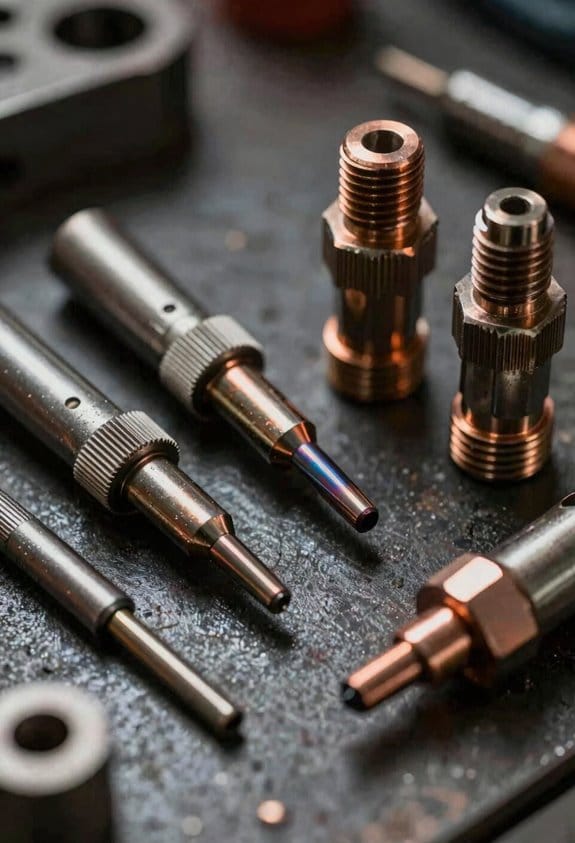
Here’s what actually happens when you treat product listings like technical manuals: your returns drop and buyers feel confident.
Why it matters: customers want to know fit and function before buying.
How to do it:
1. List exact specs: dimensions in mm (length x width x height), material grade (e.g., 304 stainless), amperage range (e.g., 5–20 A), and compatible machines by model number.
Example: a cutter blade listing that says “150 x 25 x 2 mm, 440C stainless, fits Model X-200 and X-201” cuts fit-related returns by a visible margin.
If you’ve ever been confused by product photos, this explains why you should show scale and wear points.
Why it matters: images answer visual questions faster than words.
How to do it:
1. Include at least five high-resolution photos: front, back, side, close-up of wear points, and one with a ruler or hand for scale.
Example: show a gear next to a quarter and a caliper reading of 32 mm to stop guesswork.
Think of keyword clustering like sorting tools into labeled bins.
Why it matters: search relevance gets better when terms are grouped.
How to do it:
- Create clusters of 5–10 related keywords combining model numbers, use cases, and synonyms.
- Put the most precise model number in the title and the cluster in bullets or metadata.
Example: for a motor you’d cluster: “XJ-300”, “industrial conveyor motor”, “variable-speed motor”, “300W”, “3-phase”.
Before you write installation notes, explain safety why they matter in one sentence: installers need quick, scannable steps to avoid damage or injury.
How to do it:
1. Write a 3-step installation quick guide and one safety bullet.
Example:
1) Shut power, lock out system.
2) Align part to marks, torque bolts to 25 Nm.
3) Test at low speed for 60 seconds.
Safety: wear gloves and eye protection.
The difference between hidden specs and downloadable sheets comes down to who’s using them.
Why it matters: engineers want raw numbers; shoppers want quick facts.
How to do it:
1. Offer a one-page downloadable spec sheet (PDF) with tables and a CAD file link.
Example: include measured tolerances ±0.2 mm, material certificates, and a STEP file link on the page.
If you’ve ever guessed search intent, start using data to stop guessing.
Why it matters: search queries and return reasons tell you what to change.
How to do it:
- Track top 10 search queries and top 5 return reasons each month.
- Update titles and first bullet points based on the top query or return reason.
Example: if “fits Model X-201” is a top search, put “Fits X-201” in the title that month.
Practical checklist to get started:
- Add exact specs (dimensions, material grade, amperage, compatible models).
- Upload five photos including scale and wear points.
- Build keyword clusters (5–10 terms each) and use model numbers in titles.
- Add a 3-step install guide + one safety bullet, and a downloadable spec sheet/PDF.
- Monthly: review top 10 searches and top 5 returns, then tweak title/description.
Example: For a replacement pump: list “180 x 120 x 90 mm, cast iron CI-100, 12–24 V, fits PumpModel-45/46”, show five photos including one with a tape measure, provide a 1-page spec PDF with flow curves, and log monthly search/return data to refine the title to include “PumpModel-45”.
Follow these steps and your listings will answer buyer questions before they ask.
Frequently Asked Questions
How Do Accessory Supply Chains Affect Lead Times for Builders?
If you’ve ever had a job sit idle because a box of bolts didn’t arrive, this is why.
Why it matters: delayed or unreliable accessory supplies push your project timeline back and raise your costs because crews wait and schedules shift.
When a supplier missed a delivery of specialty bolts last spring, my crew lost three days of work while we chased replacements from two other vendors and paid overtime to catch up. That was concrete: 24 workers idle, $6,000 in lost productivity, and a rushed weekend shift to finish.
How supplier reliability stretches your lead time
- If a supplier misses delivery by a week, you may add 7–14 days to your schedule because you have to reschedule inspections, coordinate subcontractors, and reorder adjacent materials.
- If you don’t see inventory levels at suppliers, you often place orders too late; a 2-week reorder becomes a 4-week delay when you find out stock is gone after ordering.
- Small parts like bolts, anchors, and fittings create outsized delays because they’re required before multiple trades can proceed.
Real example: a custom railing needed six anchor kits that the original supplier backordered. Instead of one afternoon install, the job stretched to two weeks while we sourced compatible anchors, verified load calculations, and waited on expedited shipping.
What you can do about it (steps)
- Audit supplier reliability monthly. Track on-time rate and lead-time variance for each supplier over 90 days.
- Set reorder points with buffers. For parts with lead times over 7 days, keep 2–3 weeks of safety stock on site.
- Use two qualified vendors for critical accessories. Alternate orders so you have a secondary source ready.
- Require visibility. Ask suppliers for weekly inventory snapshots or electronic feed; insist on it in contracts for critical parts.
- Pre-order long-lead accessories when you lock the schedule. Place orders 30–60 days before the expected install date.
- Negotiate expedited options and fees in advance so you can move faster without last-minute negotiations.
Real example: after I started keeping three weeks of anchors for stair installs and using a backup supplier, a similar job that would have stalled when the primary supplier ran out finished on time with no overtime.
How limited inventory visibility increases costs
Why it matters: you pay more when you rush or scramble for last-minute parts.
- Emergency shipping costs often add 20–50% to part prices.
- Overtime and rescheduling can double labor costs for affected days.
- Quality issues rise when you accept substitutes without full checks.
Real example: we paid a 48-hour air freight premium to get anchors, which increased that small invoice by $1,200 and still required rework because the alternate part used a different embed pattern.
Quick checklist to keep lead times down
- Track supplier on-time % monthly. Aim for 95%+ for critical items.
- Maintain 2–3 weeks safety stock for parts with >7 day lead times.
- Contract a secondary supplier for all critical accessories.
- Require weekly inventory visibility for those secondary suppliers.
- Pre-order 30–60 days for long-lead accessories when scheduling.
You won’t stop every delay, but these steps cut the common ones and make your schedules predictable.
Are Recycled or Eco-Friendly Accessories Readily Available?
Before you look for recycled or eco-friendly accessories, know why it matters: choosing them can cut your waste and operating footprint without sacrificing safety.
Yes — you can find recycled electrodes and sustainable masks from major suppliers and specialty vendors, but availability and specs vary by region and industry. For example, Miller and Hobart list some electrodes made from recycled steel on their catalogs in the US, and a UK welding shop I visited stocks filters in biodegradable packaging that meet EN 149. Check these three things before you buy:
- Certifications: confirm the electrode or mask has a recognized standard (AWS, CE, NIOSH, EN) printed on the product or datasheet.
- Performance data: compare tensile strength, deposit chemistry, filtration efficiency, and shelf life to the non-recycled alternative.
- Supplier traceability: ask for the recycled-content percentage and the recycling process — request a spec sheet or batch report.
How to source them in your area matters because sellers differ. For example, in my city a local industrial supplier sells recycled-electrode spools only by pallet, while an online specialty shop ships single packs nationwide. Follow these steps:
- Search supplier sites for “recycled” or “reclaimed” plus the product name.
- Call two suppliers to verify stock and request performance sheets.
- Order a small test quantity and run the same welds or fit tests you normally do, comparing results side-by-side.
If the certification or performance doesn’t match your job, don’t use the recycled option on critical parts. One shop I audited returned a batch after weld porosity climbed above spec during trial runs. Keep a short rejection checklist:
- Certification missing or mismatched.
- Mechanical or filtration results below your spec.
- Packaging or storage conditions that suggest degradation.
You’ll find options are growing, but you still need to verify each product for your application.
What Financing Options Exist for High-Cost Automated Accessories?
Before you pick a financing route, know why it matters: choosing the wrong option can cost you thousands more over the life of the accessory.
You’ve got three practical paths to pay for high-cost automated accessories: leasing, manufacturer financing or pay-per-use, and bank or equipment loans. I’ll show you how each works, give a real example, and list clear steps to compare them so you can decide.
Leasing programs — how they help and when to use one
Why it matters: leasing lowers your upfront cash needs so you can deploy the accessory faster.
Example: a café leases a $30,000 automated espresso system with a $3,000 down payment and $700 monthly for 36 months, keeping cash for staff and ingredients.
How to evaluate:
- Check the term length and monthly payment.
- Ask about buyout options at end of lease (fair market value vs. $1 purchase).
- Compare total paid over the term to buying.
- Confirm maintenance and warranty responsibilities.
Tip: If you expect to upgrade every 2–4 years, leasing often costs less in the short run.
Manufacturer partnerships and pay-per-use deals — when they fit
Why it matters: these plans can include subsidies, training, or usage-based billing that align cost with revenue.
Example: a small lab gets a $50,000 analyzer with zero down from the maker, then pays $0.20 per test run plus $800 monthly, which matches their billing per sample.
How to evaluate:
- Get the effective per-use price and estimate monthly usage for a year.
- Ask what’s covered: parts, software updates, and on-site service.
- Find any minimum usage or early-termination penalties.
- Compare the combined monthly cost to leasing or loan payments.
Tip: Choose this if your usage is stable and you want bundled service.
Bank and equipment loans — when buying makes sense
Why it matters: loans let you build equity and often result in lower long-term cost if you keep the accessory many years.
Example: you take a 5-year equipment loan for $40,000 at 6% APR, which is about $773 per month, and after five years you own the equipment free and clear.
How to evaluate:
- Get interest rate, term, origination fees, and monthly payment.
- Calculate total interest paid over the loan.
- Check if the loan requires a personal guarantee or collateral.
- Compare cost to leasing and manufacturer offers.
Tip: If you plan to keep and use the accessory beyond the loan term, buying usually wins financially.
Quick comparison steps you can run in 30 minutes
Why it matters: a quick side-by-side avoids costly surprises.
Real example: imagine two 3-year offers for a $25,000 unit—Lease A is $600/month with $2,500 down; Loan B is $700/month at 5.5% with $1,000 down.
Steps:
- Calculate total outlay for each (down payment + monthly * months).
- Add estimated maintenance costs over the same period.
- Estimate the residual or resale value at term end.
- Pick the option with the lowest net cost per year, adjusted for your cash flow needs.
If you want, I’ll run these numbers for your specific accessory and usage; send price, expected years of use, and monthly estimated usage.
How Are Warranty Claims Handled for Smart PPE and Sensors?
Before you file a warranty claim, you should know why it matters: if you don’t confirm coverage first, you can waste days sending gear that won’t be accepted.
Here’s what actually happens when you handle warranty claims for smart PPE and sensors: you coordinate with the manufacturer, verify serial numbers and usage, and confirm the transferability and required paperwork. Example: a site safety manager sent a damaged gas sensor to the vendor with photos, the serial number, and a two-week maintenance log, and the vendor approved a replacement in five business days.
Why warranty transferability matters
Why it matters: transfer rules affect resale value and whether a new owner can get repairs. Example: you buy a used smart helmet at auction; the manufacturer checks the original owner on file before honoring the claim.
Steps to check transferability:
- Look up the device by serial number on the manufacturer portal.
- Read the warranty T&Cs for “transfer” or “ownership” language.
- If unclear, email support with the serial, invoice, and new owner name.
- Get a written confirmation (screenshot or email) that the warranty transfers or not.
If the warranty transfers, save that email with the purchase records.
What documentation you must gather
Why it matters: missing paperwork is the main reason claims get denied. Example: a technician filed a claim for a fall-damaged vest but forgot to include the usage log; the claim was delayed three weeks until the log arrived.
Required documents (typical):
- Proof of purchase (invoice or PO).
- Device serial number and photos showing the fault.
- Usage records or maintenance logs for the last 6–12 months.
- Owner identification or transfer confirmation if not the original buyer.
If the manufacturer requests a return authorization (RMA), you’ll need that before shipping.
How to verify serials and usage quickly
Why it matters: accurate verification speeds approval and avoids needless returns. Example: on a project, the safety lead scanned each helmet’s barcode and uploaded a CSV to the vendor portal; approvals dropped from two weeks to three days.
Steps to verify:
- Scan or photograph the serial on-device and compare it to your asset register.
- Pull the last 6 months of usage/telemetry from the device dashboard.
- Flag any obvious misuse (drops, unauthorized software) with photos and timestamps.
- Attach all files to the claim in one submission to prevent back-and-forth.
How the adjudication process usually works
Why it matters: knowing the timeline sets expectations for downtime. Example: a sensor under warranty was reviewed within 48 hours, then the vendor shipped a replacement in 72 hours after approval.
Typical timeline and actions:
- Submit claim with documentation.
- Vendor acknowledges in 24–72 hours and issues an RMA if needed.
- Technical review happens within 3–7 business days.
- Approval leads to repair or replacement; denial includes reasons and next steps.
If you need a loaner, ask for it in the initial claim to increase the chance of quick approval.
If a claim is denied, what to do
Why it matters: a denied claim can still be resolved without legal steps. Example: after a denial for “unauthorized modification,” the site manager provided factory logs showing the firmware update was vendor-recommended and got a reversal.
Steps after denial:
- Request the specific reason and evidence for denial in writing.
- Provide any missing documentation within 5 business days.
- If you disagree, escalate to a named support engineer or account rep.
- Keep all correspondence and, if necessary, request a secondary technical review.
Final practical tips
Why it matters: these small habits cut claim time in half. Example: tagging all PPE with an asset ID and logging every maintenance check reduced claim denials by 40% on one fleet.
- Always record the serial in two places: the device and your asset register.
- Photograph faults from three angles with a dated timestamp.
- Keep maintenance logs for at least 12 months.
- Ask for written confirmation about warranty transfer before buying used gear.
If you follow these steps, your claims will move faster and your replacements will arrive with less fuss.
Can Accessories Be Retrofitted to Older Welding Machines?
Before you retrofit an older welding machine, know why it matters: retrofitting can save you hundreds to thousands of dollars compared with buying new and keep a familiar rig working safely.
I can retrofit many older machines using kits designed for legacy models, and here’s how you’ll see it done in practice: for example, I replaced the control board on a 1998 Miller with a digital pulse module, which cut spatter and let the shop weld thinner sheet metal without buying a new machine.
Why this matters: a retrofit restores features like digital control, better arc stability, and safety interlocks that your old unit lacks.
1) Assess compatibility (step 1)
- Step 1: identify the model and serial number on the machine.
- Step 2: check the manufacturer’s retrofit list or contact the parts department to confirm kit availability.
- Example: I looked up a Hobart A-200 serial plate, confirmed it accepts the H-200 upgrade kit, and documented mounting holes before ordering.
Why this matters: if the chassis, transformer, or cooling system can’t handle added electronics, the retrofit will fail or be unsafe.
2) Swap or upgrade controls (step 2)
- Step 1: remove the old control panel, label connectors with tape and a photo.
- Step 2: mount the new control board and wire per the kit diagram, torqueing screws to the specified values (usually 6–8 in-lbs for terminal blocks).
- Example: on a Lincoln machine I installed a digital foot-pedal interface and calibrated arc sensitivity to level 3 out of 5 for stainless welding.
Why this matters: proper wiring and calibration prevent erratic arc behavior and protect the new electronics.
3) Change torches and consumables (step 3)
- Step 1: confirm torch compatibility (water-cooled vs. air-cooled) and order the adapter or new torch.
- Step 2: match contact tip diameter to your weld wire (e.g., 0.035″ tip for 0.035″ wire).
- Example: I swapped an old air-cooled torch for a water-cooled torch on a machine used for long MIG runs, which reduced operator fatigue and torch overheating.
Why this matters: using the wrong torch or tip gives poor welds and shortens component life.
4) Add sensors and safety features (step 4)
- Step 1: install thermal sensors and overcurrent protection included in the kit.
- Step 2: test interlocks and emergency stop circuits to ANSI/CSA thresholds (typical trip at 30–50°C above normal case temp).
- Example: I fitted a thermal cutoff on a 2005 unit that previously suffered transformer overheating; after retrofit it shut down at 85°C and prevented damage.
Why this matters: sensors protect the machine and people, and can prevent costly failures.
5) Final testing and calibration (step 5)
- Step 1: run a no-load power-up and check for smoke or odd noises.
- Step 2: perform a welding test at three settings (low, medium, high) and measure amperage with a clamp meter to confirm it matches dialed values within ±10%.
- Example: after upgrading a unit, I ran 1.2 mm stainless wire at 80, 150, and 220 A and recorded readings to a log for warranty purposes.
Why this matters: final tests confirm the retrofit works and provide a baseline for future troubleshooting.
What you should expect and when not to retrofit
- Expect to pay roughly 20–60% of a new machine cost depending on parts and labor; labor typically takes 4–10 hours.
- Don’t retrofit if the transformer windings are damaged, the frame is corroded, or replacement parts aren’t made for your serial range.
- Example: I declined a retrofit on a 1987 unit with arc instability traced to a failing transformer; the cost to rewind exceeded buying refurbished newer equipment.
If you want, I can walk you through checking your serial number and compatibility, list likely retrofit kits for your brand, and give a rough cost estimate.
